




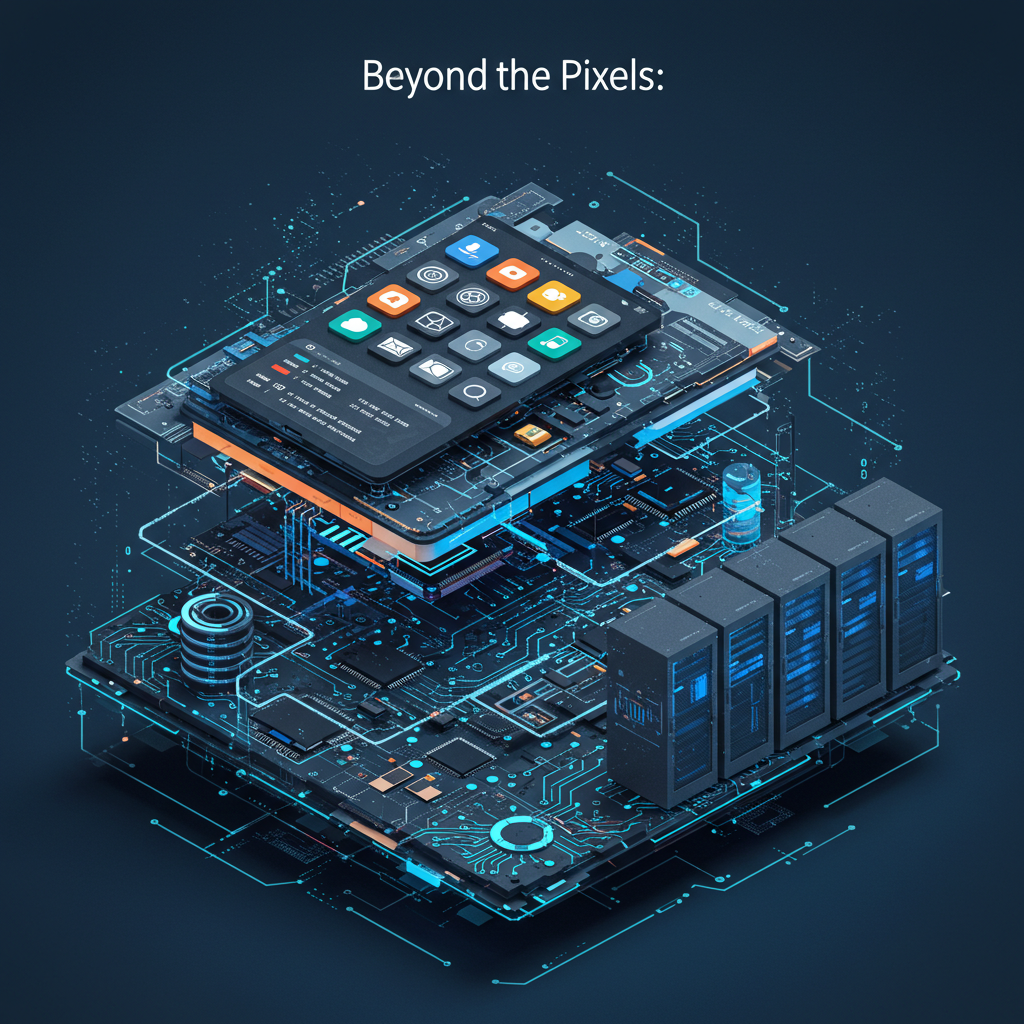
In today’s digital landscape, a visually appealing website or application is just the starting point. While aesthetics capture attention, the true power and longevity of any digital platform lie beneath the surface – in its Web System Design. At React Digi, we specialize in crafting these robust digital engines, moving beyond simple layout design to build custom systems engineered for performance, security, and growth.
Many businesses understand the need for a website, but often the focus remains primarily on the visual presentation. However, for platforms involving user interaction, data management, transactions, or specific workflows – like membership portals, e-commerce sites, event registration platforms, or internal software – the underlying architecture is paramount. This is the realm of Web System Design.
What Exactly is Web System Design?
Think of it like building a high-performance vehicle. The sleek exterior (UI/UX design) is essential, but it’s the engine, transmission, chassis, and safety features (the system design) that determine how fast it goes, how reliably it runs, how safe it is, and how easily it can be upgraded.
Web System Design involves architecting the core components:
- Architecture: Choosing the right structure (e.g., monolithic, microservices, serverless) to balance complexity, scalability, and maintainability.
- Database Design: Efficiently structuring how data is stored, accessed, and managed (SQL vs. NoSQL, schema design, indexing).
- API Development: Creating secure and efficient communication channels between different parts of the system or with third-party services.
- Scalability Planning: Designing the system to handle growth in users and data without performance degradation.
- Security Implementation: Building in defenses from the ground up to protect user data and prevent unauthorized access (authentication, authorization, encryption, vulnerability patching).
- Technology Stack Selection: Choosing the appropriate programming languages, frameworks, and tools for the job.
Neglecting these aspects leads to systems that might look good initially but quickly run into problems.
The Hidden Complexity: A Membership System Example
Let’s consider building a seemingly straightforward custom membership system. The user sees a login page, profile management, and perhaps access to exclusive content. Behind the scenes, effective system design must address significant technical challenges:
- Secure Authentication & Authorization: How do you reliably verify user identity and ensure they only access content appropriate for their membership level? This requires robust password hashing, session management, and potentially multi-factor authentication.
- Scalability: What happens when your user base grows from 100 to 10,000? A poorly designed system will slow down, leading to user frustration. Good design anticipates growth with efficient database queries, caching strategies, and potentially scalable cloud infrastructure.
- Payment Gateway Integration: If memberships are paid, securely integrating with payment providers (like Stripe or PayPal) is critical. This involves handling transactions, managing recurring billing, dealing with failed payments, and adhering to strict security standards like PCI-DSS.
- State Management: Users transition between states (e.g., trial, active, expired, cancelled, grace period). The system must manage these states reliably, triggering appropriate actions (like revoking access or sending renewal reminders).
- Data Integrity: Ensuring user data, membership status, and payment history are accurate and consistent across the system is vital.
Designing for these challenges requires foresight and technical expertise – simply coding the visible features isn’t enough.
Good Design vs. Bad Design: The Long-Term Impact
The difference between thoughtful system design and a rushed implementation becomes starkly apparent over time:
| Feature | Good Software Design (React Digi’s Approach) | Bad Software Design |
|---|---|---|
| Reliability | Stable performance, minimal downtime, predictable behaviour. |
Frequent crashes, unexpected errors, data inconsistencies. |
| Scalability | Handles increased user load and data volume gracefully. |
Slows down significantly under load, requires costly overhauls to grow. |
| Security | Built with security best practices, resilient against common threats. |
Vulnerable to attacks, potential data breaches, difficult to patch. |
| Maintainability | Easy to update, add new features, or fix bugs. Clear, well-documented code. |
Difficult and expensive to modify, changes often break other parts. |
| User Exp. | Fast load times, smooth interactions, builds user trust. |
Sluggish performance, frustrating bugs, drives users away. |
| Total Cost | Higher initial investment, but lower long-term maintenance and rework costs. |
Lower initial cost, but high ongoing costs for fixes and scaling. |
A system suffering from bad design accumulates “technical debt,” making every future change slower, riskier, and more expensive.
The React Digi Difference: Quality as a Foundation
At React Digi, we understand that true digital value comes from systems built on a solid foundation. While many agencies can create visually appealing front-ends, our core strength lies in engineering the robust backend systems that power them.
- Holistic Approach: We consider the entire lifecycle, from initial concept and architecture to deployment and future scalability.
- Experienced Engineers: Our team possesses deep expertise in modern architectural patterns, database optimization, security protocols, and cloud infrastructure.
- Future-Proofing: We design systems with maintainability and future growth in mind, selecting appropriate technologies and writing clean, documented code.
- Focus on Non-Functional Requirements: We prioritize crucial aspects like performance, security, and scalability from day one, not as afterthoughts.
- Collaborative Process: We work closely with you to understand your specific business needs and translate them into effective technical solutions.
Choosing a partner for your custom web system is an investment. While shortcuts might seem cheaper initially, investing in quality design with a team like React Digi pays dividends through reliability, user satisfaction, security, and the ability to adapt and grow your digital presence effectively over the long term. We don’t just build websites; we engineer digital solutions.
Ready to Build a System That Truly Performs?
If you’re looking to create a custom website, web application, or internal software system that needs to be reliable, secure, and scalable, don’t settle for just a pretty interface. Let’s discuss how robust Web System Design can provide the foundation for your digital success.
Contact React Digi today for a consultation, and let’s build something exceptional together.